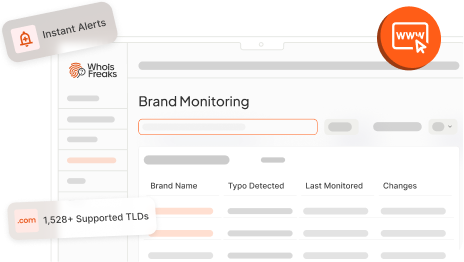
Domain Brand Monitoring
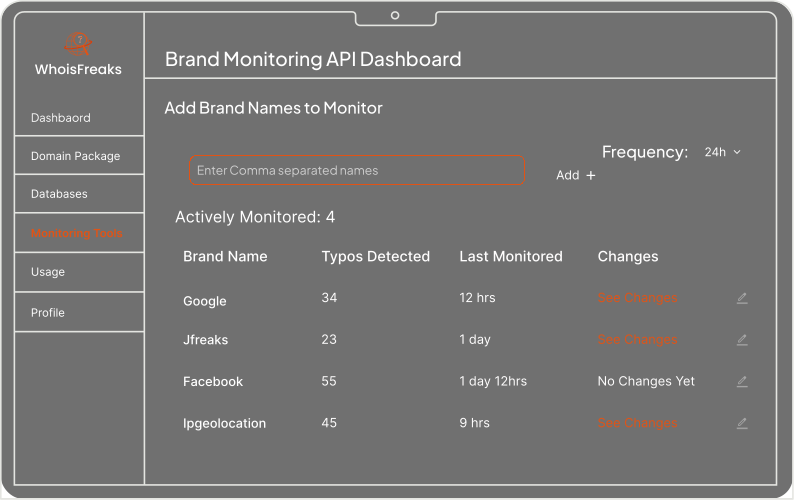
Domain brand monitoring scans every newly registered domain across 1528+ TLDs for names containing your brand, trademark, or chosen keywords. The moment a lookalike, typosquat, or homoglyph appears, you get an alert with the WHOIS registration record, TLD, and registrant data, typically within 12 hours of registration.
- 941.2M+Domains Tracked
- 689.1M+Active Domains Tracked
- 1,529Tlds Count
- 4.3B+Whois Records Count
- 7,951Registrar Count
- 35M+Daily Refreshed Whois Data



Features
Catch Domain Threats the Moment They Appear
Suspicious lookalike domains often appear within hours or days of a product launch, campaign, or press cycle. The most common patterns: misspellings of your domain that capture mistyped traffic, your brand combined with words like "login" or "support" to host phishing pages, and visually identical characters from other alphabets that read as your brand in a browser bar but resolve elsewhere. WhoisFreaks scans every new domain registration across 1528+ TLDs twice daily and sends an alert with the full WHOIS or RDAP record the same scan cycle a match appears.
Typosquats
Misspellings and character swaps of your brand name (e.g. "whoisfreeks.com" instead of "whoisfreaks.com")
Lookalike combinations
Your brand name combined with words like "support," "login," "official," or "store" - the most common phishing pattern
Homoglyph domains
Visually identical characters from other alphabets that look like your domain in a browser bar but resolve to a different address entirely
TLD variations
Your brand registered under .net, .io, .shop, .co, .com, .fr, .pk, .org and 1529+ other extensions you haven't claimed.
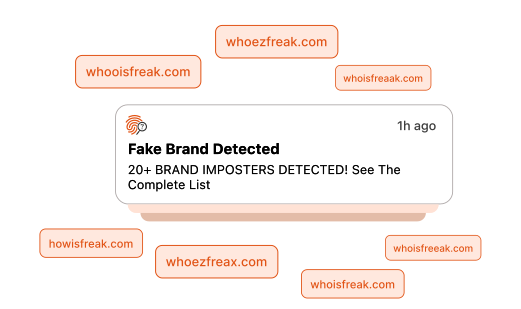
How We Detect
Identify
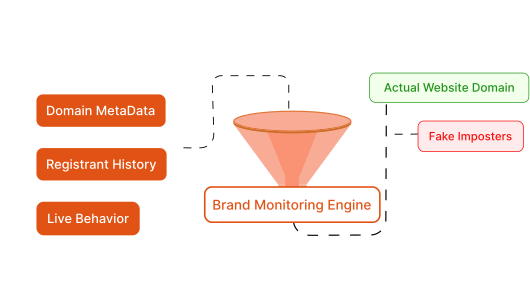
We scan 1529+ TLDs twice daily, using fuzzy matching and homoglyph detection algorithms to find threats.
Analyze
Our engine evaluates domain metadata, registrant history, and live behavior to separate noise from phishing.
Notify
Instant alerts are sent via webhook or email as soon as a high-risk domain is registered or activated.
Features
What Brand Monitoring Delivers
Eight capabilities you get with every monitor: alerts, filtering, history, format flexibility, scan frequency, and TLD coverage.
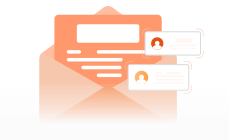
Email Alerts
Receive an email or Telegram alert in the same scan cycle when a lookalike domain appears. Each alert includes the domain and registration date so you can act directly.
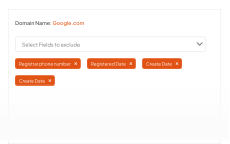
Keyword Exclusion
Add exclusion keywords to filter out partial matches and legitimate domains you don't want to see. Cuts alert volume on common-word brand names like "apple" or "amazon".
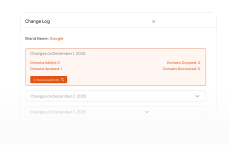
View Historical Results
Browse every past alert from the day you set up the monitor. Filter and review for internal audit, compliance review, or pattern analysis.
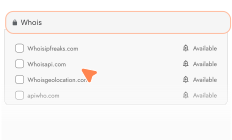
New Domains Monitoring
Every domain registered worldwide each day is checked against your keywords. Coverage runs across the same feed that powers the WhoisFreaks Newly Registered Domains product.
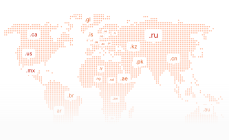
Supported TLDs
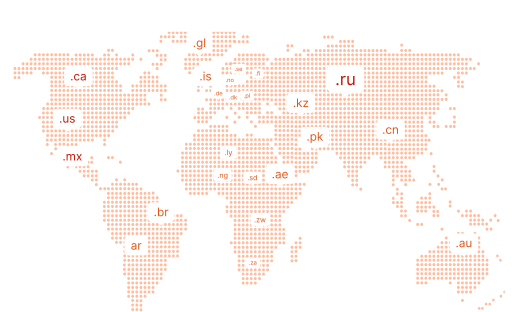
Coverage spans 1529+ TLDs: every generic TLD (.com, .net, .io, .shop), every ccTLD (.uk, .de, .fr, .cn, .au), and new gTLDs. Attackers can't evade you by switching extensions.
Downloadable JSON File
Export any alert as JSON for direct ingestion into a takedown ticket, SIEM, or case-management system. No CSV cleanup or screen-scraping required.
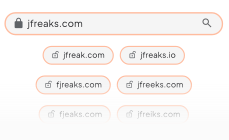
Typosquatting Results
Fuzzy-match and character-transposition detection runs by default on every monitor. Catches deliberate misspellings "go0gle.com" and adjacent-key swaps.
Monitor Frequency
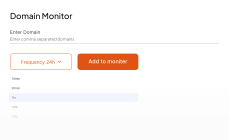
Twice-daily scan cycles, roughly every 12 hours. New registrations are flagged the same cycle they appear in registry feeds.
Use Cases
Using Brand Monitoring Data for UDRP Complaints
When brand monitoring detects an infringing domain, the alert captures the WHOIS or RDAP registration record at the moment of detection, timestamped, complete, and downloadable. This record can support a UDRP complaint by preserving the registration data, the timing of registration relative to your trademark filing, and any subsequent changes. UDRP outcomes still depend on proving confusing similarity, lack of legitimate interest, and bad-faith registration and use.
Typosquatting satisfies all the requirements for UDRP Complaints.
- 1
Registration record at detection
The full WHOIS snapshot captured when the infringing domain was first registered.
- 2
Pattern of conduct evidence
Use registrant monitoring alongside brand monitoring to track whether the same email or organization has registered multiple infringing domains.
- 3
Historical WHOIS records
If the domain changed hands or had its registrant details updated since registration, WhoisFreaks historical data captures that chain.
- 4
Downloadable JSON
Export every alert as structured JSON to feed directly into your legal case management system or evidence package.
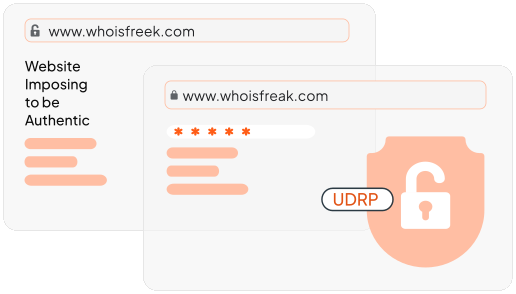
UDRP is one path for domains held for resale, parked to block your brand, or used to redirect customers. Your monitoring record contributes to the evidence file by documenting when the registration appeared, what data the registry held at the time, and how the record changed afterward.
Product
Custom Brand Monitoring
Custom Brand Monitoring
For enterprises tracking multiple brands, regional variations, or product lines. Custom plans extend the standard product with higher keyword limits, faster scan frequency, dedicated support, and tailored alert routing. Coverage includes both newly registered and dropped domains, exact matches and fuzzy variants, with WHOIS history attached to each event.
Use Cases
Brand Monitoring in Action
See how brand monitoring applies to diverse businesses and needs.

Trademark Protection
IP and trademark teams collect domain registration alerts as evidence for UDRP filings, cease-and-desist letters, and takedowns.
Spoofing Prevention
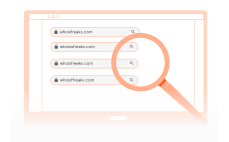
Security teams flag lookalike domains during the parking window, before the phishing page is built and emails go out to customers.
Competitor Analysis
Track competitor domain registrations to see what products they're launching, what regions they're entering, and which brands they buy.
Brand Portfolio Management
Catch defensive registration gaps. When a brand-adjacent domain appears under a new TLD, decide whether to take it down or register it.
Brand Reputation Management
Catch impersonators registering your brand under new TLDs or with added words before they damage customer trust or organic search rankings.
Fraud and Abuse Prevention
Lookalike domains back fake storefronts, gift-card scams, and ad-redirect campaigns. Catch the infrastructure at the domain layer.
Try Brand Monitoring with a one-brand trial monitor on request. Paid plans include multiple concurrent monitors, twice-daily scans across 1528+ TLDs, email and Telegram alerts, and full WHOIS data on every match.
Related Brand Protection Services
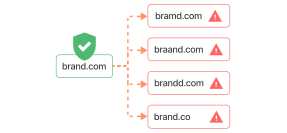
Domain Typosquatting API
Check on demand which typo and lookalike variants of your brand name are registered and live today.
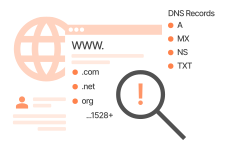
Newly Registered Domains
Search the full daily NRD feed yourself across 1,528+ TLDs, with WHOIS and DNS data on every record.
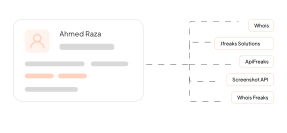
Registrant Monitoring
Track the registrant behind an infringing domain and every other name that they add on top of it.
FAQs
What is (domain) brand monitoring?
Domain brand monitoring scans every newly registered domain across 1528+ TLDs for names containing your brand, trademark, or chosen keywords. The moment a domain matching your keyword is registered, you receive an alert with the domain name, WHOIS registration details, and TLD.
Brand monitoring targets three threat types:
- Typosquatting: Deliberate misspellings of your brand (for example, "gooogle.com" instead of "google.com") registered to capture mistyped traffic or run phishing pages.
- Lookalike domains: Your brand combined with words like "support," "login," "store," or "official" to impersonate your business.
- Unauthorized trademark use: Third parties registering your trademarked name under a different TLD (.uk, .de, .cn) to operate in markets you serve.
IP and trademark teams, security and fraud teams, marketing and brand teams, and domain portfolio managers all use brand monitoring to catch infringements at the registration moment, before the domain goes live.
Who uses brand monitoring and what are the main use cases?
Brand monitoring serves four distinct professional audiences, each with a different primary use case:
- Trademark lawyers and IP teams: Trademark lawyers and IP teams use brand monitoring to collect evidence of trademark infringement. When a domain containing a client's registered trademark is detected, the monitoring record - including the registration date, registrant WHOIS data, and registration history - provides the documentation needed to file a UDRP complaint with WIPO or issue a cease-and-desist letter.
- Security and fraud prevention teams: Security and fraud prevention teams use brand monitoring to identify phishing infrastructure before it becomes active. A newly registered lookalike domain is often set up weeks before a phishing campaign launches. Detecting it early means the team can file a takedown request with the registrar while the domain is still parked - before any customer is targeted.
- Marketing and brand management teams: Marketing and brand management teams use it to monitor competitor keyword registrations, identify unauthorized resellers operating fake storefronts, and track brand mentions in newly registered domain names across markets they are expanding into.
- Domain portfolio managers: Domain portfolio managers use brand monitoring to maintain a complete picture of brand-adjacent registrations, identify domains they should defensively register, and receive alerts on expiring domains they may want to acquire.
What is typosquatting and how does brand monitoring detect it?
How quickly does brand monitoring detect new domain registrations?
What is the difference between brand monitoring and domain monitoring?
Can brand monitoring help with UDRP complaints and trademark enforcement?
Does brand monitoring cover country-code TLDs (ccTLDs) like .uk, .de, .cn?
What happens when brand monitoring detects an infringing domain?
Can I monitor multiple brand names or keywords simultaneously?
How does WhoisFreaks brand monitoring compare to MarkMonitor, CSC, or DomainTools?
Is the alert record admissible as UDRP evidence?
Lookalike domains are registered every day. Most brands find out too late.
WhoisFreaks monitors new domain registrations across 1529+ TLDs for your brand name, trademarks, and keywords - and alerts you the moment one appears, with full WHOIS data included.